
The best time management tips for students to help you balance academics, extracurriculars, and personal life while staying stress-free and productive.
Why Is Time Management Necessary??
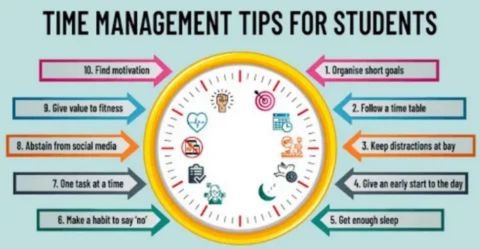
Every student dreams of achieving good grades, excelling in activities, and still having time for relaxation. However, juggling all these responsibilities can be challenging without proper time management. Mastering time management skills not only improves academic performance but also builds discipline, focus, and confidence. In this article, we’ll explore 10 effective time management tips for students that can transform your daily routine and help you make the most of every hour.
1. Set Clear and Realistic Goals
Start by setting SMART goals—Specific, Measurable, Achievable, Relevant, and Time-bound. Instead of saying “I’ll study more,” specify “I’ll study math for 45 minutes every day.” Realistic goals provide direction and prevent burnout. Writing your goals down also makes them feel more concrete and easier to track.
2. Prioritize Your Tasks Using the Eisenhower Matrix
Not all tasks are created equal. Use the Eisenhower Matrix to categorize tasks into four types:
- Urgent and important (do immediately)
- Important but not urgent (schedule for later)
- Urgent but not important (delegate or minimize)
- Neither urgent nor important (eliminate)
This helps students focus on what truly matters instead of getting lost in unproductive activities.
3. Create a Daily or Weekly Schedule
A structured routine is one of the best time management tools for students. Use planners, calendars, or digital apps like Google Calendar or Notion to map out your classes, study hours, exercise, and leisure time. Sticking to a consistent schedule reduces decision fatigue and builds good habits.
4. Break Big Tasks into Smaller Chunks
Large assignments or exam preparation can feel overwhelming. Break them into manageable mini-tasks—for example, reading one chapter per day instead of the entire book at once. This makes it easier to stay consistent and reduces procrastination.
5. Eliminate Distractions
Smartphones, social media, and multitasking are productivity killers. When studying, put your phone on silent or use apps like Forest or Focus@Will that help minimize distractions. Create a clean, quiet study environment where your mind can focus solely on the task at hand.
6. Use the Pomodoro Technique
The Pomodoro Technique is a popular time management method that boosts concentration. Here’s how it works:
- Study for 25 minutes.
- Take a 5-minute break.
- After four sessions, take a longer 15–30-minute break.
This approach helps students maintain focus and prevents mental fatigue during long study sessions.
7. Learn to Say “No”
While extracurricular activities and social events are important, overcommitting can lead to stress and poor performance. Learn to say no to unnecessary obligations. Prioritize what aligns with your goals and well-being instead of trying to do everything.
8. Review and Reflect Weekly
Set aside time each week to reflect on what worked and what didn’t. Did you meet your goals? Were you productive or distracted? Self-reflection helps identify time-wasting habits and improves your strategy for the following week. It’s an essential part of continuous improvement.
9. Maintain a Healthy Balance
Good time management for students isn’t just about studying hard—it’s also about resting well. Get enough sleep, eat nutritious food, and include physical exercise in your schedule. A healthy body supports a sharp and focused mind, making your study time more effective.
10. Use Technology Wisely
Technology can be your best friend or your worst enemy. Use digital tools like
- Trello or Todoist for task management
- Google Keep for quick notes
- Quizlet for study flashcards
These apps help you stay organized and efficient. But avoid excessive screen time or getting distracted by entertainment apps during study hours.
FAQs
1. Why is time management important for students?
Effective time management helps students balance studies, personal life, and extracurricular activities, reducing stress and improving academic performance.
2. What’s the best way to avoid procrastination?
Set small, achievable goals and follow the Pomodoro Technique to maintain focus and momentum.
3. How many hours should a student study per day?
It depends on individual goals, but 2–4 focused hours of quality study is often more effective than long, distracted sessions.
4. Which time management app is best for students?
Apps like Notion, Todoist, and Google Calendar are great for organizing tasks and maintaining productivity.
5. How can students manage time during exams?
Create a study timetable in advance, focus on high-priority subjects, and include short breaks to stay fresh and retain information better.
6. What’s the biggest mistake students make with time management?
Many students fail to plan realistically and underestimate how long tasks take. Overloading schedules leads to stress and poor results.