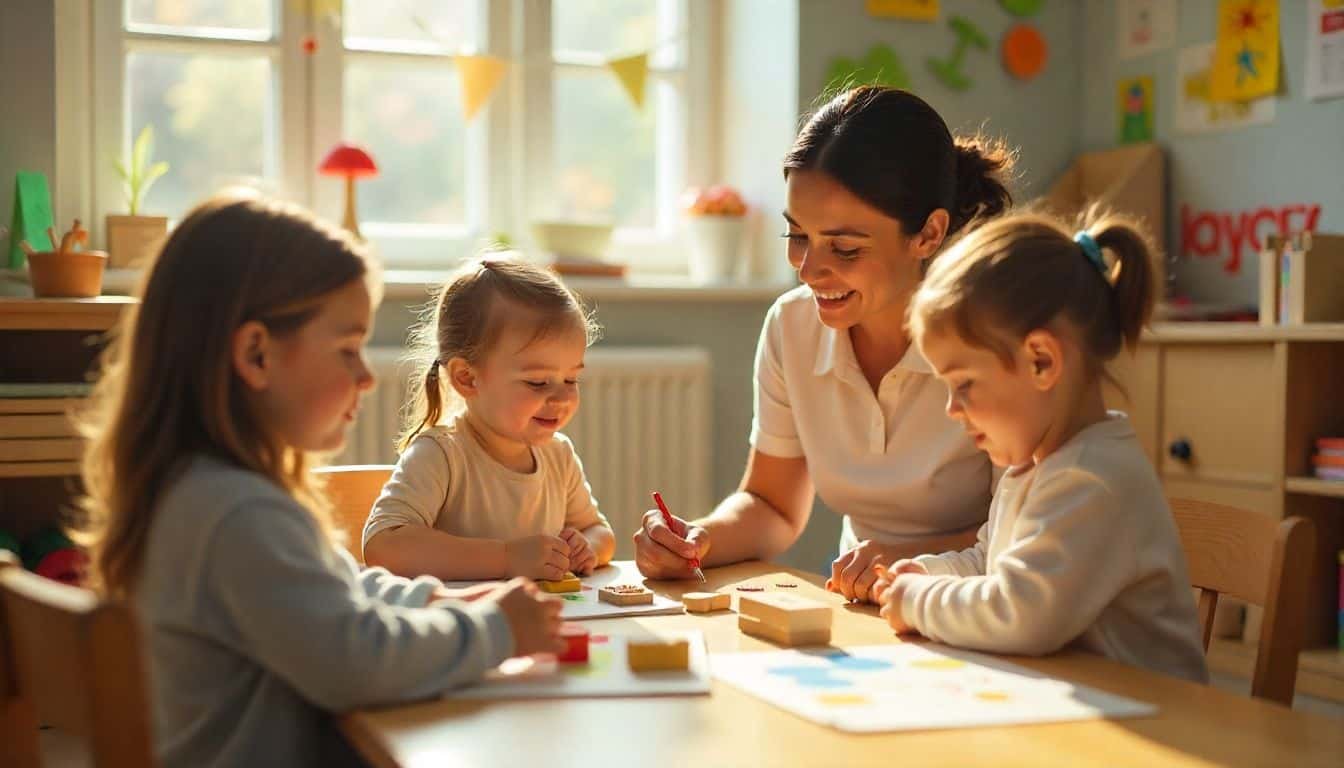
Discover the core philosophy about early childhood education, its guiding beliefs for teachers, and how it shapes learning and child development.
Introduction
Every teacher who works with young children carries a unique philosophy about early childhood education—a set of guiding beliefs that shapes how they view learning, teaching, and child development.
This philosophy defines how educators interact with children, design classroom environments, and collaborate with families. In many ways, a teacher’s philosophy is the heartbeat of their practice.
Understanding and articulating a personal philosophy about early childhood education allows teachers to act intentionally rather than by habit. It ensures consistency, promotes reflective teaching, and helps educators align their methods with their values
. In this article, we’ll explore what this philosophy means, where it comes from, the principles behind it, and how it translates into daily teaching practice.
Defining a Philosophy about Early Childhood Education
At its core, a philosophy about early childhood education is a belief system—a clear statement about how children learn best, the role of the teacher, and the purpose of education in the early years. Unlike a curriculum, which details what to teach, a philosophy explains why and how teaching happens.
A strong early childhood education philosophy typically includes several pillars:
- Children as active learners: Every child learns best through play, exploration, and meaningful relationships.
- Teachers as facilitators: Educators guide, scaffold, and support learning rather than direct it.
- Environment as the third teacher: The classroom should be safe, inclusive, and stimulating.
- Learning through play: Play-based experiences encourage problem-solving and creativity.
By defining a personal teaching philosophy, educators ensure their approach to learning aligns with their core values and the needs of each child.
Historical and Theoretical Foundations
The philosophy about early childhood education draws heavily from early theorists who shaped how we understand child development.
- Maria Montessori emphasized independence and hands-on exploration. Her philosophy of “follow the child” still guides many educators today.
- Jean Piaget focused on cognitive development, viewing learning as a process of building knowledge through experience.
- Lev Vygotsky introduced the concept of social learning and the “zone of proximal development,” showing how interaction supports growth.
- John Dewey believed in experiential learning—education grounded in doing, reflecting, and problem-solving.
These thinkers built the foundation for what we now call developmentally appropriate practice—teaching that matches each child’s stage of growth. Modern educators use these ideas to create philosophies that are child-centered, inclusive, and relationship-based.

Core Beliefs and Guiding Principles
Every strong philosophy about early childhood education rests on core principles that guide daily practice.
| Core Principle | What It Means for Teachers |
|---|---|
| Children are capable and curious | Teachers respect children’s interests and allow them to lead learning. |
| Learning is holistic | Focus on emotional, social, physical, and intellectual growth equally. |
| Play is powerful | Play is not a break from learning—it is learning. |
| Families are partners | Parents and caregivers are essential collaborators in education. |
| Culture and community matter | Learning environments reflect children’s backgrounds and values. |
Teachers who embrace these beliefs see themselves as co-learners alongside children. They value open-ended exploration, observation, and responsive teaching. A teacher’s guiding beliefs for early childhood education act as a compass—ensuring that every activity, conversation, and routine aligns with a meaningful purpose.
Putting a Philosophy about Early Childhood Education into Practice
Having a philosophy means little without action. The best teachers use their philosophy about early childhood education to inform everything they do—from planning lessons to managing behavior.
For example:
- A play-based teacher might design centers for building, art, and pretend play, allowing children to express curiosity naturally.
- An emergent curriculum teacher observes children’s interests—like bugs or building—and develops learning experiences around them.
- A Reggio Emilia-inspired educator may use documentation (photos, quotes, drawings) to reflect children’s thinking and make learning visible.
Teachers also face challenges—balancing personal beliefs with school policies or family expectations. Reflective practice helps bridge these gaps. Regular journaling, team discussions, and professional learning ensure that a teacher’s early childhood teaching philosophy evolves as their understanding deepens.
Why a Philosophy about Early Childhood Education Matters
A clearly defined philosophy about early childhood education benefits everyone—teachers, children, and families alike.
For teachers, it provides clarity and confidence. It guides decision-making, supports consistency, and helps navigate classroom challenges. For children, it ensures that learning environments are intentional, inclusive, and developmentally appropriate. Families also benefit because they understand what the teacher values and can align home experiences with school practices.
Most importantly, when teachers operate from a thoughtful philosophy, children thrive. They feel seen, respected, and empowered as learners. This alignment between belief and practice is what turns good teaching into transformative teaching.
FAQ—Philosophy about Early Childhood Education
1. What is meant by “philosophy about early childhood education”?
It refers to a teacher’s core beliefs and values about how young children learn and how education should support their overall development.
2. How is a philosophy different from curriculum?
Your philosophy explains why and how you teach; curriculum explains what you teach.
3. Can a teacher combine multiple philosophies?
Yes. Many teachers blend Montessori, Reggio Emilia, or play-based approaches to form their unique early childhood education philosophy.
4. Why is it important for teachers to define their philosophy?
It ensures that teaching decisions are intentional, aligned with beliefs, and responsive to children’s needs.
5. How can teachers reflect on or revise their philosophy?
Review it yearly. Reflect after major experiences or changes in perspective to ensure it still represents your authentic teaching values.
Conclusion
A philosophy about early childhood education isn’t just a statement—it’s a living reflection of who you are as an educator. It defines your purpose, your approach, and your relationship with children and families.
When teachers take the time to explore and articulate their philosophy, they move beyond routines to create intentional, inspiring learning experiences.
Ultimately, the strongest philosophy about early childhood education is one that evolves with experience, respects children’s individuality, and nurtures their love for learning—laying the foundation for lifelong growth.