Learn the evaluation definition in education, its key types, importance, and best practices for improving teaching and learning outcomes effectively.
Introduction: What Evaluation Means in Education
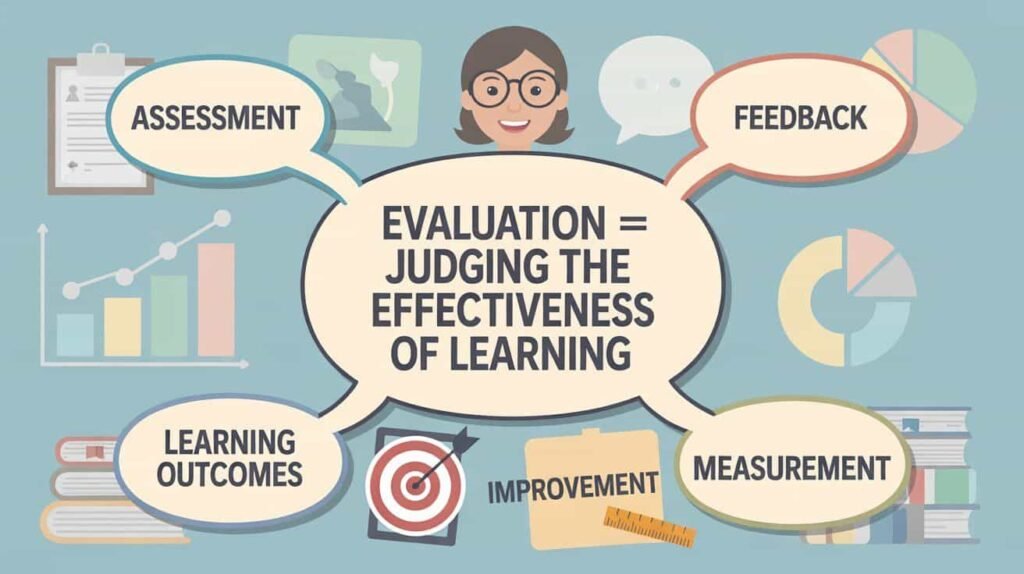
In modern classrooms, understanding the evaluation definition in education is essential for improving both teaching and learning. Evaluation is more than grading—it’s a process of collecting, analyzing, and interpreting data to judge the effectiveness of teaching methods, learning progress, and educational programs. When applied correctly, it ensures that education stays purpose-driven, learner-centered, and outcome-oriented.
Simply put, evaluation answers three important questions: What did students learn? How well did teachers teach? And what changes are needed to improve? By clarifying the evaluation definition in education, teachers and institutions can create a continuous feedback loop that drives growth for both learners and educators.
Evaluation Definition in Education – Clarifying the Concept
The evaluation definition in education refers to a systematic process of determining the value or effectiveness of an educational activity, program, or learner’s performance. It goes beyond measurement—it involves judgment based on data and evidence.
Unlike assessment, which focuses on measuring what students know, evaluation interprets those results to make decisions about teaching effectiveness and learning improvement. It includes evaluating curriculum quality, instructional strategies, classroom climate, and student outcomes.
For example, if a teacher notices that students perform poorly on comprehension tasks, evaluation helps identify whether the problem lies in the teaching method, learning material, or assessment type. This makes evaluation a powerful tool for informed decision-making.
Importance of Evaluation in Education
The importance of the evaluation definition in education lies in its ability to improve quality at every level—student, teacher, and institution.
- Improves Teaching and Learning
Evaluation highlights strengths and weaknesses in the learning process. Teachers can modify lesson plans, adjust methods, and offer targeted support where needed. - Promotes Accountability
Schools and teachers use evaluation results to measure performance and progress, ensuring resources and teaching methods meet standards and goals. - Guides Curriculum Development
A sound evaluation definition in education helps in revising curricula to ensure they stay relevant and meet student needs. - Motivates Students
Regular feedback encourages learners to take ownership of their studies, making them more engaged and self-aware. - Ensures Quality Education
By applying evaluation systematically, institutions maintain transparency, fairness, and continuous improvement across all learning activities.
In short, without a proper evaluation definition in education, schools risk teaching without truly knowing whether learning has occurred effectively.
Types of Evaluation in Education
Understanding the types of evaluation in education helps teachers apply the right approach at the right time.
1. Formative Evaluation
Formative evaluation occurs during the learning process. Its main goal is to monitor progress and guide improvement. Examples include quizzes, class participation, peer feedback, and teacher observations. This ongoing feedback helps students grow and enables teachers to adjust instruction in real time.
2. Summative Evaluation
Summative evaluation happens at the end of a learning period, such as final exams or end-of-term projects. It determines whether learning goals have been achieved and assigns grades or certifications. While it’s important, relying only on summative evaluation can overlook day-to-day progress.
3. Diagnostic and Placement Evaluation
Diagnostic evaluation identifies students’ strengths, weaknesses, and prior knowledge before instruction begins. Placement evaluation, on the other hand, helps determine the appropriate starting level for learners in a new course.
4. Norm-Referenced and Criterion-Referenced Evaluation
- Norm-referenced evaluation compares a learner’s performance to that of peers.
- Criterion-referenced evaluation measures performance against a fixed set of standards or learning objectives.
Both are vital under the evaluation definition in education, depending on whether comparison or mastery is the goal.
5. Program or Process Evaluation
Beyond classroom learning, evaluation also applies to programs and curricula. Program evaluation determines whether an educational initiative meets its objectives—such as a literacy improvement project—by analyzing outcomes, efficiency, and impact.

Principles and Best Practices for Effective Evaluation
A strong evaluation definition in education rests on several guiding principles:
| Principle | Explanation |
|---|---|
| Validity | Measures what it is intended to measure. |
| Reliability | Produces consistent results over time. |
| Fairness | Treats all learners equally and avoids bias. |
| Transparency | Clearly explains the criteria and process. |
| Authenticity | Uses real-world tasks that reflect true learning. |
| Continuous Feedback | Uses results to inform teaching and learning. |
Best practices include:
- Align evaluations with learning objectives.
- Use multiple methods—tests, projects, and reflections—to get a full picture.
- Provide timely feedback for improvement.
- Train teachers to interpret results accurately.
- Review evaluation tools regularly for relevance and equity.
When educators adopt these principles, the evaluation definition in education becomes a foundation for excellence, not just administration.
Challenges in Applying Evaluation in Education
Even with clear definitions and principles, challenges persist:
- Lack of Training: Teachers may not have the expertise to design or interpret effective evaluations.
- Time and Resource Constraints: Proper evaluation requires time for planning, grading, and feedback.
- Bias and Subjectivity: Evaluations may unintentionally favor some students over others.
- Overemphasis on Exams: Focusing only on summative tests limits holistic learning.
- Data Misuse: Evaluation results must lead to action; otherwise, they lose purpose.
Addressing these challenges means fostering evaluation literacy, balancing formative and summative approaches, and ensuring that evaluation drives real educational improvement.

FAQs About Evaluation Definition in Education
Q1: What is the evaluation definition in education?
It’s the process of systematically judging the value, effectiveness, and outcomes of teaching and learning activities.
Q2: How is evaluation different from assessment?
Assessment gathers data about learning; evaluation interprets that data to make decisions about improvement and policy.
Q3: Why is evaluation important for teachers?
It helps teachers adjust methods, identify learning gaps, and ensure instruction meets objectives.
Q4: What are the main types of evaluation in education?
Formative, summative, diagnostic, placement, and program evaluations are the most common.
Q5: How can schools make evaluation fair and meaningful?
By ensuring transparency, multiple evaluation tools, and continuous feedback throughout the learning process.
Conclusion: The Power of Effective Evaluation
A clear understanding of the evaluation definition in education empowers teachers and institutions to turn data into action. When evaluation is fair, transparent, and continuous, it not only measures success—it creates success. It guides teaching, motivates learners, and ensures educational quality at every level.
In short, adopting a purposeful evaluation definition in education transforms the classroom into a place where learning is measured, understood, and constantly improved.