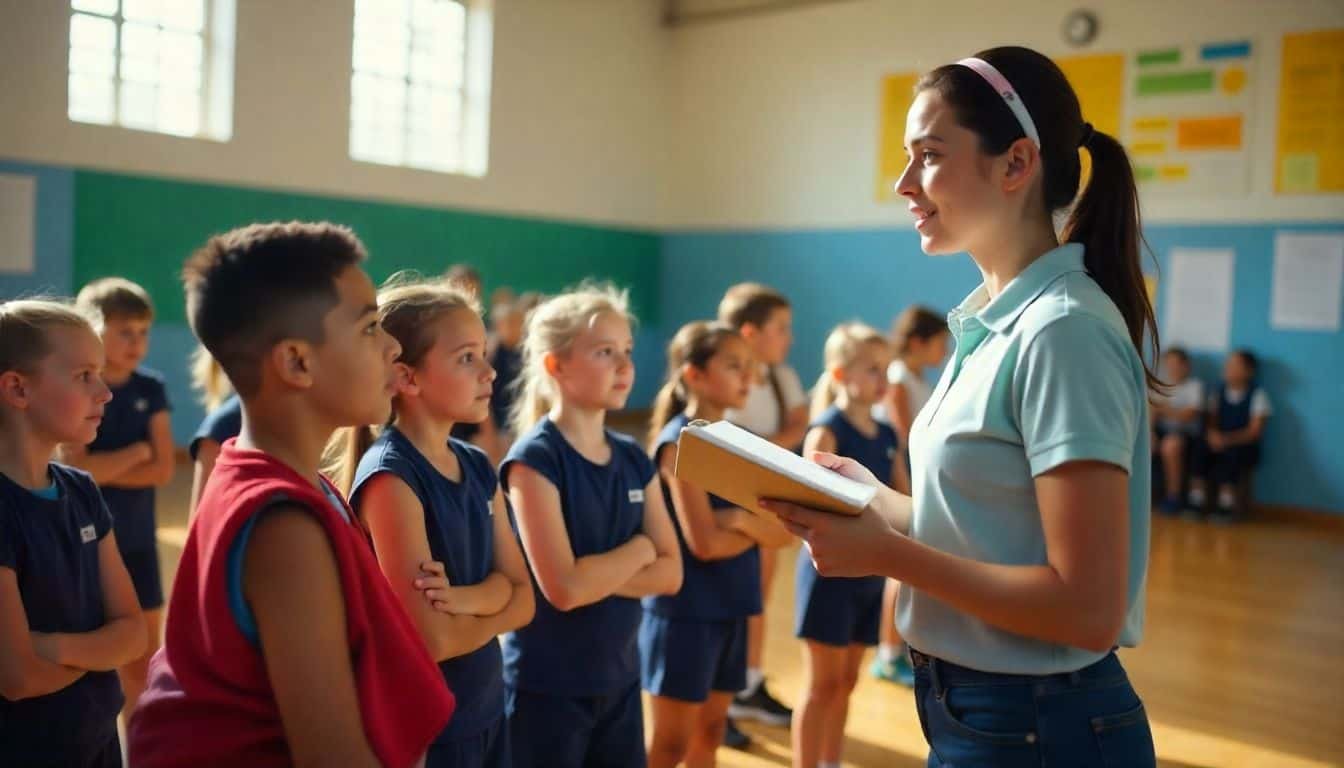
Discover the most important physical education class rules every teacher needs to ensure safety, participation, respect, and active learning in PE.
Introduction: Why Physical Education Class Rules Matter
Physical Education (PE) is one of the most energetic and engaging classes in school — but without structure, it can quickly become chaotic. That’s why physical education class rules are essential.
Well-defined rules create a safe, inclusive, and productive environment where every student can move, learn, and grow. They guide students to act responsibly, respect others, and use equipment safely.
A consistent rule system helps build responsibility, sportsmanship, and teamwork. When expectations are clear, students spend more time being active and less time confused or distracted.
Setting Clear & Positive Physical Education Class Rules
How rules are worded affects how students follow them. Instead of long lists of “don’ts,” write positive, action-based expectations that students can easily understand.
| Ineffective Rule | Positive, Clear Version |
|---|---|
| Don’t run before the whistle. | Wait for the teacher’s signal before moving. |
| Don’t misuse the equipment. | Use all equipment safely and as instructed. |
| Don’t talk when others are speaking. | Listen and give attention when others are speaking. |
Keep your list short—about five or six rules that are easy to remember and apply. Examples include:
- Be prepared with proper PE clothes and shoes.
- Respect others, equipment, and space.
- Follow directions the first time.
- Always try your best and stay active.
- Be safe—use equipment correctly.
Displaying these physical education class rules in your gym helps students self-monitor and creates a positive classroom culture.
Key Rule Areas: Safety, Preparation, Respect & Transitions
Every PE program should focus on four major areas of classroom management: Safety, Preparation, Respect, and Transitions.
1. Safety & Equipment Use
Safety comes first in any movement-based activity. Students must understand that carelessness can lead to injuries. These safety rules set the foundation for a secure class environment:
| Safety Rule | Purpose |
|---|---|
| Use equipment only with teacher permission. | Prevents accidents and misuse. |
| Keep hands, feet, and objects to yourself. | Maintains personal space and safety. |
| Report damaged equipment immediately. | Ensures hazards are addressed quickly. |
| Wear athletic shoes and proper attire. | Reduces risk of slipping or falls. |
By reinforcing safety-focused physical education rules, teachers promote accountability and prevent injuries before they happen.
2. Preparation & Participation
Preparedness plays a major role in how smoothly a class runs. When students come ready to learn, teachers can focus on skill-building rather than behavior correction.
- Arrive on time and ready to move.
- Dress appropriately—no jewelry or unsafe clothing.
- Bring a positive attitude and give full effort.
- Participate in every activity, even your least favorite.
Consistent participation rules encourage effort, discipline, and fair grading for all students.
3. Respect & Sportsmanship
Respect is at the heart of every successful physical education program. Teaching students how to be kind competitors prepares them for teamwork both in and out of class.
| Expected Behavior | Example in Action |
|---|---|
| Show respect to classmates. | Encourage teammates and avoid teasing. |
| Show respect to teachers and referees. | Listen to instructions and accept calls. |
| Practice good sportsmanship. | Congratulate others and handle losses gracefully. |
When respect and sportsmanship are reinforced, students learn empathy, fairness, and collaboration — skills that extend beyond physical education.
4. Procedures & Transitions
Smooth transitions keep energy high but organized. Students should know exactly what to do when moving between activities, stations, or locker rooms.
- Enter and exit quietly and calmly.
- Line up quickly in assigned order.
- Stop, look, and listen when the teacher signals.
- Wait for directions before touching equipment.
Practicing PE class procedures regularly minimizes confusion and maximizes active learning time.
Involving Students in Creating Rules
One of the best ways to promote accountability is by involving students in setting classroom rules. Ask them:
“What rules do we need to keep our PE class safe and fun?”
When students contribute, they develop ownership and responsibility for maintaining a positive environment.
Pro Tip: Review the rules mid-semester. Discuss what’s working and adjust wording if needed. This keeps students engaged and reinforces that rules exist to support success, not restrict it.
Enforcing Rules: Consequences & Reinforcement
Rules are only effective when applied fairly, consistently, and clearly. Students respect systems that are predictable and transparent.
Sample Consequence Ladder
| Offense Level | Action | Purpose |
|---|---|---|
| First Warning | Verbal reminder. | Raises awareness of the rule. |
| Second Warning | Short time-out or reflection. | Allows time to reset behavior. |
| Third Warning | Removal from activity or parent contact. | Teaches accountability. |
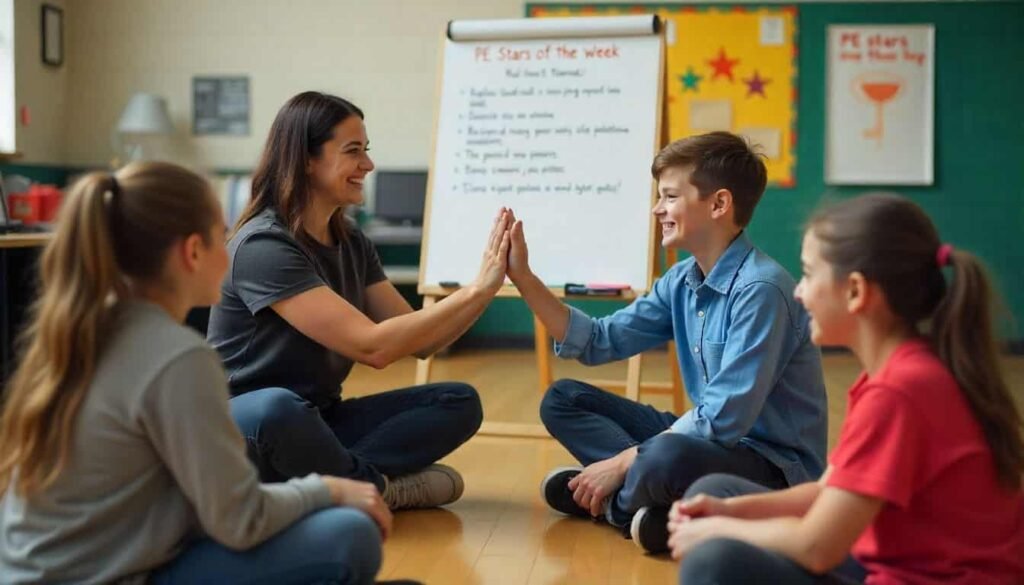
But consequences aren’t enough. Teachers should use positive reinforcement to reward consistent rule-following — praise, stickers, extra game time, or leadership roles all work wonders.
Use simple management signals like:
- Whistle or freeze signal for attention.
- “1-2-3 eyes on me” call-and-response.
- Hand raise or light cue to stop activity.
These small systems create structure without interrupting the fun.
Practical Tips for Implementing Physical Education Class Rules
Implementing rules effectively requires consistency, visibility, and modeling. Follow these proven strategies:
- Display your rules clearly on posters or gym walls.
- Review rules regularly—a short reminder before class helps.
- Model expected behavior—students copy what they see.
- Reward positive behavior—celebrate progress publicly.
- Communicate with parents about PE expectations.
- Adapt rules by age group—younger students need visuals, older ones benefit from discussion.
These habits create a positive feedback loop—students understand expectations, and teachers enjoy more productive, respectful classes.
FAQs About Physical Education Class Rules
Q1: What if a student refuses to follow PE class rules?
If a student refuses to follow rules, stay calm and consistent. Apply the consequence ladder fairly and discuss the issue privately. Often, misbehavior comes from misunderstanding rather than defiance.
Q2: How often should physical education class rules be reviewed?
Rules should be reviewed at the beginning of each term and before starting new units or outdoor activities. Regular reminders keep everyone aligned.
Q3: Are physical education class rules different for younger and older students?
The core rules—safety, respect, and participation—are the same, but delivery should differ. Use visuals and demonstrations for younger students, and discussions or leadership roles for older ones.
Q4: How can teachers make physical education class rules stick long-term?
To make rules stick, integrate them into daily routines, display them prominently, and reinforce them through praise. Recognizing students who follow rules encourages long-term behavior change.
Q5: Why is it important to involve students in creating class rules?
When students help create rules, they feel ownership and accountability. It builds a sense of teamwork and respect, making them more likely to follow those rules consistently.
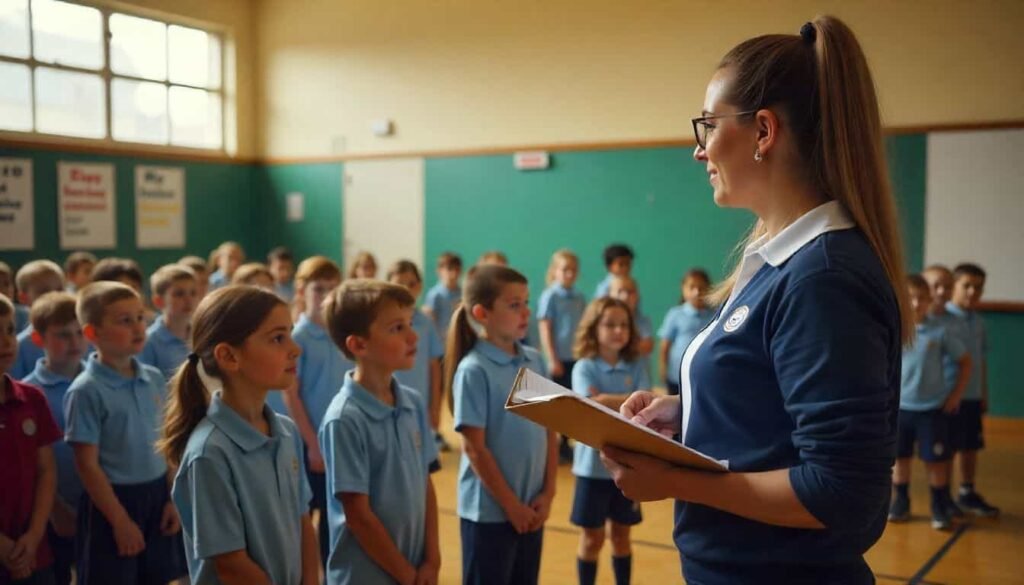
Conclusion: Building a Strong PE Environment
In conclusion, physical education class rules are the foundation of every successful PE program. They ensure classes remain safe, organized, and fun, while promoting respect and responsibility.
By keeping rules clear, positive, and consistent, and involving students in the process, teachers create a healthy environment where everyone can learn and thrive.
A great PE class isn’t just about movement—it’s about building confidence, character, and cooperation. And it all begins with strong, well-crafted physical education class rules.