The Christian philosophy of education is a powerful approach that shapes hearts and minds for God’s purpose. When learning is rooted in Scripture, students discover who they are, why they matter, and how they can serve the world.
What Is the Christian Philosophy of Education?
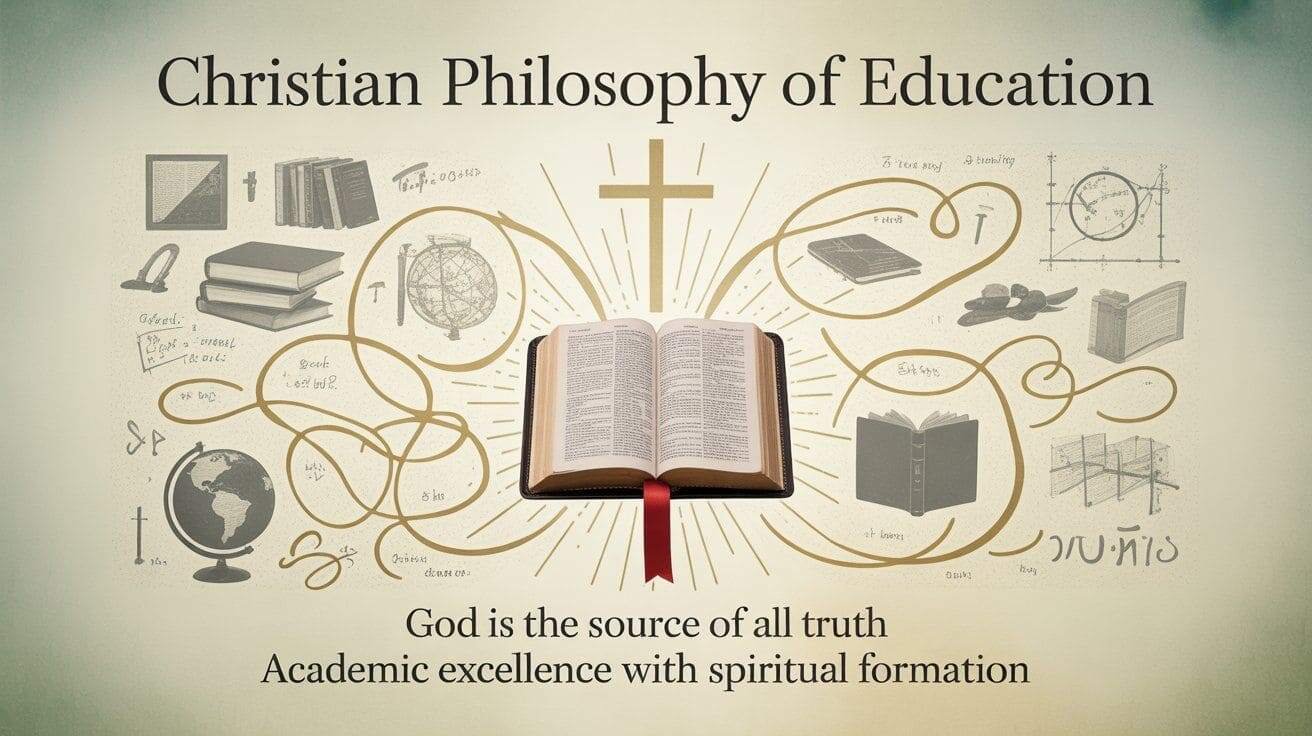
The Christian philosophy of education is more than adding Bible verses to lessons. It shapes how we view learning, children, and the purpose of school itself. It teaches that God is the source of all truth, and learning is part of knowing Him. This approach blends academic excellence with spiritual formation, preparing students to live out their faith confidently.

Christian philosophy of education
At its core, the Christian philosophy of education is a Christ-centered, biblical philosophy of schooling. Students are created Imago Dei—in God’s image—with purpose and dignity. Knowledge isn’t merely information but a way to discover God’s design for the world.
What makes it different?
- Bible-based worldview shapes how every subject is taught
- Christian pedagogy emphasizes character, wisdom, and service
- Education aims at discipleship, not only achievement
This means Christian schools focus on forming the mind and heart together.
Historical Development
Christian education began with early church teaching, where believers learned Scripture and practiced faith together. Over time, monastic and cathedral schools preserved learning in the Middle Ages.
During the Reformation, leaders like Luther and Calvin promoted education for all to read Scripture and think biblically.
Today, this philosophy influences classical Christian education, Christian schools, and homeschooling movements, all committed to fostering a biblical worldview in education.
Core Principles & Beliefs
The Christian philosophy of education rests on strong theological commitments:
- Christ-centered curriculum — all truth points to Christ
- Faith and learning integration — every subject reveals God’s world
- Whole-child formation — spiritual, academic, and character development
- Purposeful calling — students are trained to serve God and others
Learning becomes a journey toward wisdom, not just grades.

Christian Pedagogy & Classroom Practice
The teacher plays a crucial role as a mentor and disciple-maker. They model Christlike character and guide students through questions, service, and community.
Key practices include:
- Discussions that explore a biblical worldview
- A loving, accountable classroom culture
- Assessments that measure both knowledge and growth
Classrooms become places where faith is lived and learned daily.
Curriculum & Biblical Worldview Integration
Subjects are not spiritually neutral. Christian curriculum design helps students see God’s purpose everywhere:
- Science reveals the order in God’s creation
- History shows God’s work in human stories
- Literature explores truth, beauty, and morality
- Civics trains responsible citizenship
This kind of education builds a coherent worldview, not fragmented facts.
How to write a personal or institutional Christian philosophy of education
| Step | Description / Guidance |
|---|---|
| 1. Purpose Statement | Clearly define the overarching aim of your educational philosophy. Example: “To equip students with knowledge, wisdom, and Christ-centered character, grounded in a biblical worldview.” |
| 2. Theological Commitments | State core beliefs about God, Scripture, and human nature. Example: “All truth comes from God; students are created in His image (Imago Dei) and called to live for His glory.” |
| 3. Educational Goals | Identify specific objectives: academic excellence, spiritual growth, moral formation, and vocational preparation. Example: “Students will grow in critical thinking, faith, service, and cultural engagement.” |
| 4. Methods / Pedagogy | Describe teaching approaches: Bible integration across subjects, mentoring, discussion-based learning, service projects, and character formation. Example: “Teachers guide students as mentors, modeling Christlike behavior and fostering holistic learning.” |
| 5. Assessment | Explain how progress will be measured: academic achievement, spiritual maturity, ethical development, and practical skills. Example: “Assessment includes tests, projects, reflective exercises, and spiritual growth evaluations.” |
| 6. Community Partnerships | Highlight collaboration with families, churches, and local organizations to reinforce education. Example: “Parents and church leaders actively support discipleship, service, and academic growth.” |

Current Challenges & Opportunities
Christian schools navigate cultural pressure, technology, and legal boundaries while staying faithful to Scripture. Still, modern tools, online programs, and parent involvement provide new ways to strengthen Christian school philosophy and reach more families seeking values-based education.
Examples in Practice
Many schools express their mission and vision through:
- Chapel and discipleship programs
- Community service
- Worldview discussions
- Strong family partnerships
A classical Christian school or a home education model, the shared goal remains: teaching students to love God and love others.
How to Write Your Own Philosophy Statement ?
A clear Christian philosophy of education statement answers:
What do we believe about God and children?
What are our educational goals?
How do we teach and assess learning?
Keep it focused on Bible truth, discipleship, and academic excellence. This becomes a guiding document for teachers, parents, and students.
FAQ
1.What is the purpose of Christian education?
To grow in knowledge, faith, and Christlike character.
2.How does faith shape learning?
Every subject connects to God’s truth.
3.Do Christian schools still pursue high academics?
Absolutely—excellence honors God.