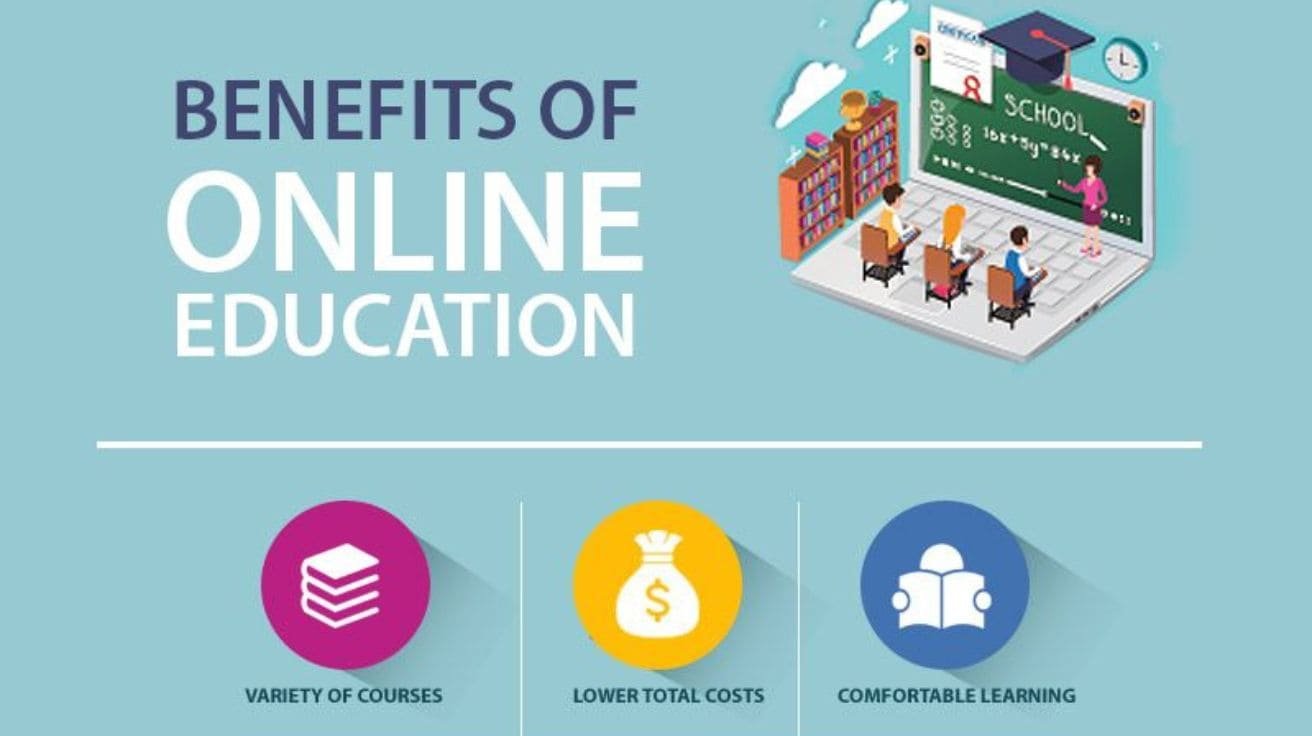
The benefits of online education—flexibility, affordability, and global access—make it one of the most effective ways to learn today. Whether you’re a student, professional, or lifelong learner, online education helps you achieve your academic and career goals at your own pace.
What Are the Benefits of Online Education?
The benefits of online learning have transformed the way people learn in the modern world. With the rise of e-learning platforms and virtual classrooms, students and professionals alike now have the opportunity to pursue knowledge without the constraints of traditional institutions.
Unlike conventional learning, online education allows learners to study from anywhere, whether at home, a café, or while traveling.
| Advantage | Benefit |
|---|---|
| Flexibility | Fit courses around work, family, and personal life. |
| Access to Programs | Learn from programs and certifications not available locally. |
| Digital Platforms & LMS | Interactive materials, videos, and forums enhance learning. |
| Accredited Programs | Recognized degrees provide career credibility. |
| Skill & Career Growth | Supports professional development and informed learning choices. |
1. Flexibility and Convenience
One of the most significant benefits of online education is its flexibility.
Self-paced learning and asynchronous courses allow students to progress at their own speed, making it ideal for working professionals, parents, and adult learners. This flexibility enables learners to balance work, family, and personal development without the stress of rigid schedules.
Through learning management systems (LMS) and digital classrooms, students can access course materials anytime and anywhere, fostering engagement and collaboration.
For those wondering how to start online learning, the process is straightforward, and there are numerous resources and tips available to help learners succeed in online courses.
Flexibility empowers students to control their learning journey and achieve success on their own schedule.

2. Cost-Effectiveness
Another major advantage of online learning is its cost-effectiveness. Online education eliminates commuting costs and reduces the need for expensive textbooks since most materials are available digitally.
Tuition fees for online degree programs are often lower than traditional on-campus programs, and many platforms even offer free or low-cost courses, such as University of the People.
This makes affordable education accessible to a wider audience. Additionally, learners can continue working while studying, making career advancement through online learning financially practical.
Online certifications and programs on trusted e-learning platforms further add value by enhancing skills without breaking the bank.
Online education delivers high-quality learning at a fraction of the cost.

3. Access to Diverse Programs
The benefits of online education extend beyond flexibility and cost savings. Through online learning, students can enroll in programs not available locally and access specialized certifications that enhance career prospects.
Many universities now offer online degree accreditation, ensuring that qualifications are recognized and respected by employers. Platforms often feature a virtual campus experience, complete with interactive learning tools, discussion boards, and multimedia resources.
For those searching for the best online courses for working professionals, these programs provide both convenience and credibility while opening doors to a wide range of academic and career opportunities.
By reducing tuition, commuting, and material costs, online education provides an accessible pathway for learners to achieve professional and academic goals without incurring excessive expenses.

4. Skill Development and Career Advancement
Online education is not just about earning a degree—it also promotes personal and professional growth. Learners develop self-discipline, time management, and digital literacy skills, all of which are essential in today’s remote and hybrid work environments.
Many career-focused online programs provide hands-on projects and real-world scenarios, helping students apply their learning immediately. By leveraging online learning tools, students can engage in interactive exercises and simulations, gaining practical experience.
The online education benefits for students are clear: improved skill sets, better employability, and enhanced prospects for career advancement through online learning.
Online education provides global opportunities for skill enhancement and career growth.

5. Personalized Learning Experience
Another key advantage of online education is the personalized learning experience it offers.
Self-paced learning allows students to revisit materials as needed and focus on areas where they require more practice. Many platforms use adaptive learning technology to tailor content to individual learning styles, ensuring that each student receives the support and challenge they need.
With interactive videos, quizzes, and collaborative tools, learners gain a deeper understanding of concepts. For anyone curious about how online learning works, these personalized features make education more engaging, effective, and suited to individual goals.
Online education opens doors to opportunities previously inaccessible due to geographic or institutional limitations, making it possible to pursue meaningful academic and career objectives anywhere, anytime.
Conclusion
The benefits of online education are clear: flexibility, affordability, access to diverse programs, skill development, and personalized learning experiences.
By leveraging e-learning platforms and digital classrooms, learners can study at their own pace, reduce costs, and enhance their career prospects.
FAQs
What are the main benefits of online education?
Flexibility, affordability, access to diverse programs, personalized learning, and career growth.
Is online education effective compared to traditional learning?
Yes. Accredited programs and interactive tools ensure effective learning.
Can working professionals benefit from online education?
Yes. Self-paced courses and digital platforms help balance work and study.