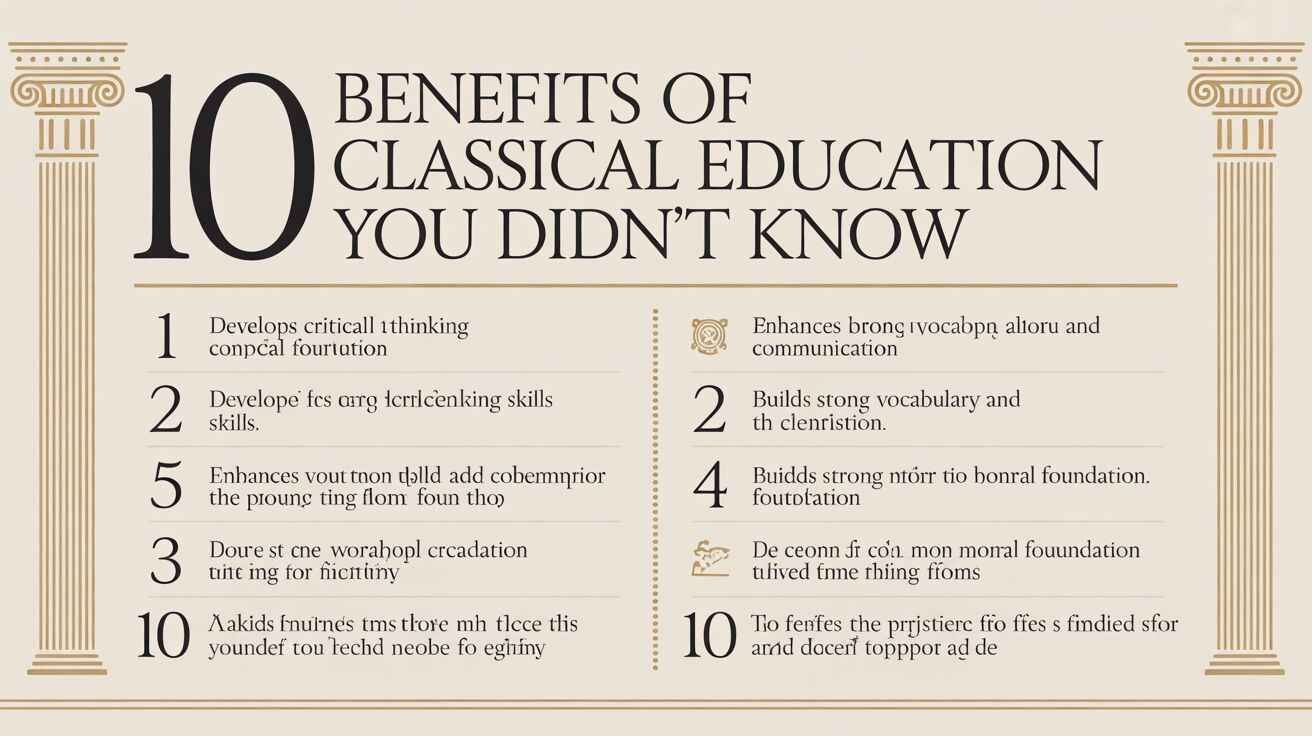
10 Benefits of Classical Education You Didn’t Know — Develops critical thinking, communication, character, cultural literacy, and lifelong learning skills.
Historical Roots: The Trivium and Quadrivium Model
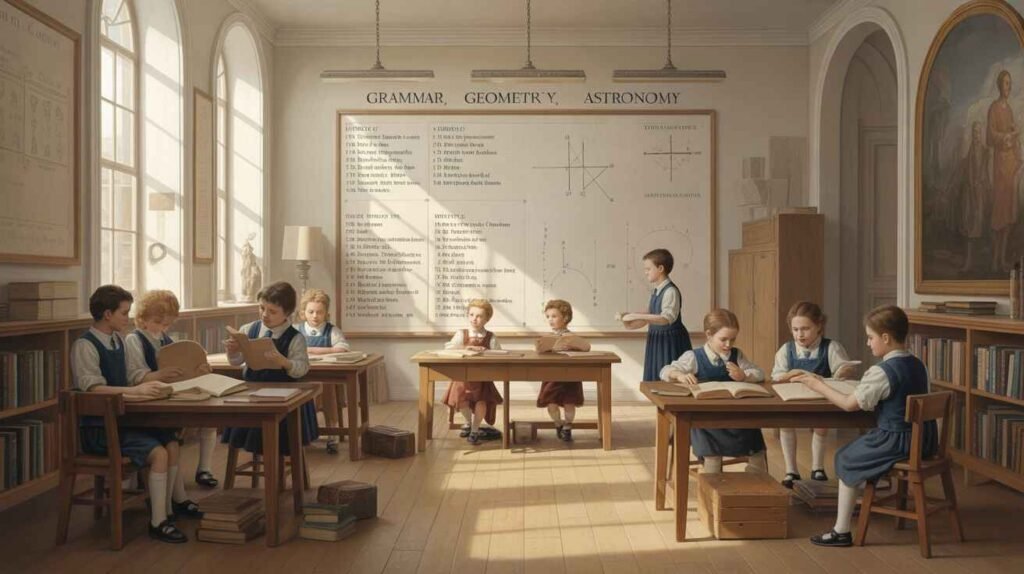
The benefits of a classical education are deeply connected to its structured learning model—the Trivium and Quadrivium. These ancient frameworks emphasize grammar, logic, and rhetoric as the foundation of communication and reasoning, followed by arithmetic, geometry, music, and astronomy for intellectual balance.
This time-tested model builds disciplined thinkers who understand both theory and application. By mastering these stages, students develop clarity of thought, analytical reasoning, and a lifelong curiosity that modern systems often overlook.
Critical Thinking and Intellectual Growth
One of the greatest benefits of a classical education is how it develops sharp, independent thinkers. Through the study of logic, philosophy, and classical texts, students learn to question, reason, and draw conclusions based on evidence rather than opinion.
Classical education trains the mind to think clearly, analyze deeply, and communicate effectively. This intellectual discipline not only enhances academic success but also equips learners to solve real-world problems with confidence and insight.

Communication and Rhetoric Skills
Another major benefit of a classical education is the mastery of language and communication. Students are trained to write clearly, speak persuasively, and express ideas with confidence. Through rhetoric, debate, and writing exercises, they learn the art of conveying truth effectively.
Classical education refines both thought and expression, creating articulate communicators who influence with clarity and purpose. These skills remain invaluable across careers, leadership roles, and daily interactions.
Character Development and Moral Virtue
A key benefit of a classical education is its focus on shaping ethical, disciplined, and responsible individuals. Through classical literature, history, and philosophy, students explore virtues like honesty, courage, and integrity.
Classical education builds character alongside intellect, teaching learners not only what to know but how to live with purpose and moral clarity. This foundation in virtue equips students to navigate life’s challenges ethically and become thoughtful leaders in both personal and professional spheres.
| Aspect | Description |
|---|---|
| Focus Area | Ethical, disciplined, and responsible character formation |
| Learning Sources | Classical literature, history, and philosophy |
| Core Virtues Taught | Honesty, courage, integrity, humility, and wisdom |
| Educational Goal | To build character alongside intellectual growth |
| Outcome | Students learn not only what to know but how to live with moral purpose |
| Real-World Impact | Equips learners to face life’s challenges ethically and lead thoughtfully in society |
Cultural Literacy and Historical Awareness
One of the enduring benefits of a classical education is its emphasis on cultural literacy. Students engage deeply with history, literature, and philosophy, gaining perspective on human achievements and societal values.
Classical education broadens understanding of the world, helping learners connect past lessons to present challenges. By studying influential texts and historical events, students develop context, empathy, and a well-rounded worldview that informs thoughtful decision-making in both personal and professional life.
Lifelong Learning and Adaptability
A lasting benefit of a classical education is its cultivation of curiosity and adaptability. By encouraging critical thinking, problem-solving, and independent inquiry, students develop a mindset that embraces continuous learning.
Classical education instills the habits and skills needed to learn throughout life, enabling learners to adapt to changing environments. This adaptability ensures that students remain versatile and capable, whether in their careers, personal growth, or navigating new challenges in an ever-evolving world.

Classical Education vs. Modern Education
Understanding the benefits of a classical education becomes clearer when compared to modern education approaches. While modern systems often focus on technology and standardized testing, classical education emphasizes reasoning, virtue, and intellectual depth.
The main distinction is that classical education nurtures the mind and character, not just immediate performance. Students gain critical thinking, moral grounding, and communication skills that prepare them for lifelong learning, while modern methods may prioritize quick results over enduring understanding and personal growth.
How to Choose a Classical Education Program
Selecting the right program ensures students experience the full benefits of a classical education. Look for curricula that emphasize the Trivium, Quadrivium, critical thinking, and character development.
The key is finding a program that balances intellectual growth with moral and practical skills. Consider school philosophy, teacher expertise, and the integration of classical texts and discussion-based learning. A well-chosen classical education program equips students with lifelong learning habits, cultural literacy, and the skills needed to excel academically and personally.
FAQs
The primary benefits of a classical education include critical thinking, effective communication, moral character, and cultural literacy. Students learn to analyze ideas, reason logically, and express themselves clearly, all while developing ethical values.
Classical education shapes both intellect and character, preparing learners for lifelong success. It equips students with versatile skills that apply to academics, careers, and personal growth, making it a holistic approach that outlasts short-term learning trends.